The Cattle Business Blueprint: Profit, Land & Legacy
- Published
- Duration
- 37:38
What does it actually take to build a cattle operation that stays profitable for decades — and passes down wealth instead of debt?
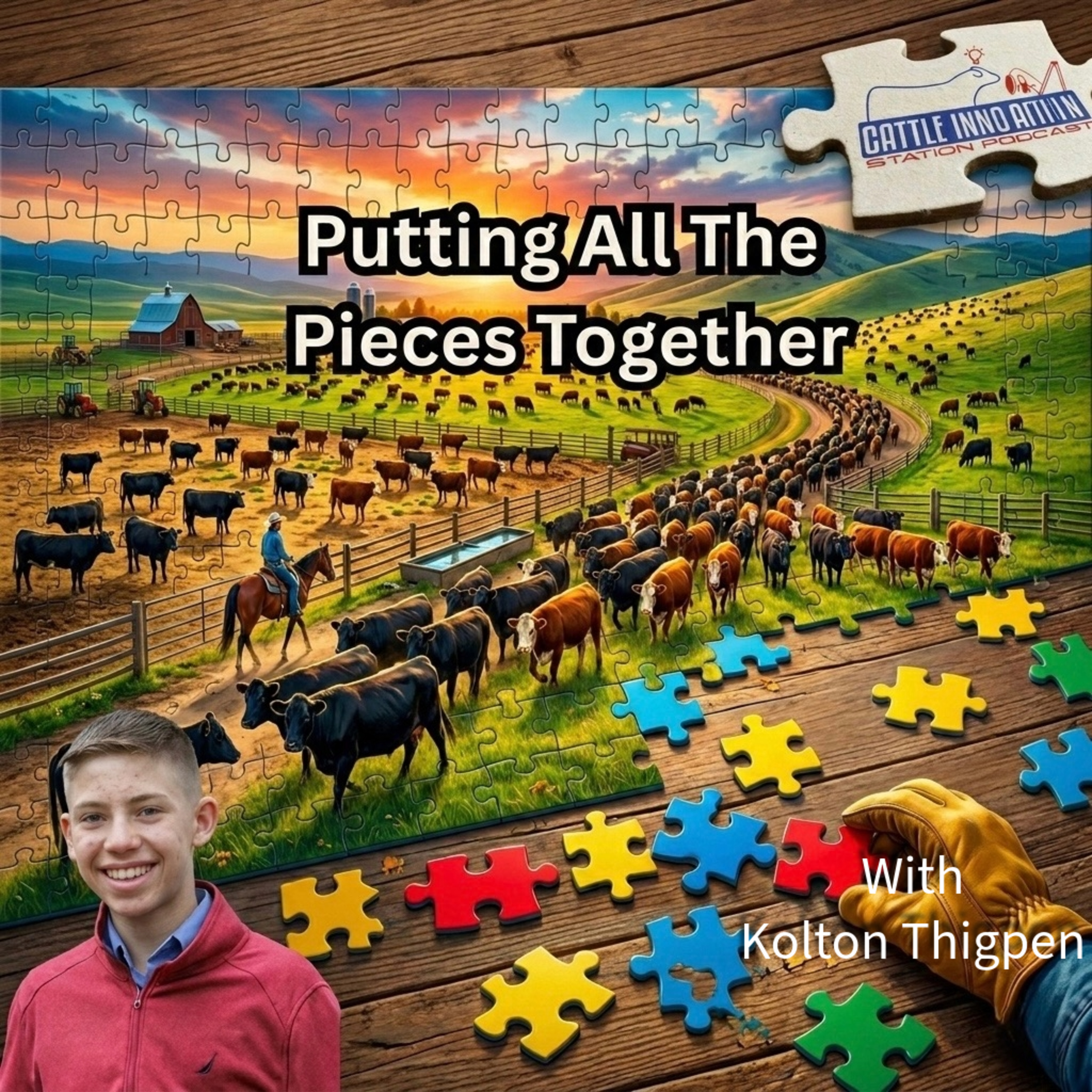
In this episode of the Cattle Innovation Station podcast, Baxter Whitworth sits down with Colton Thigpen to break down the business fundamentals every cow-calf producer needs to master. This is not a conversation about raising better cattle. It is a conversation about building a cattle business that works — financially, strategically, and generationally.
You'll learn how to identify which part of your operation is costing you the most profit, why land debt is fundamentally different from cattle debt and how to use that distinction to build long-term wealth, when frozen genetics are a better insurance policy than an actual insurance policy, how to know when your cattle operation is ready for its first employee, and how to grow strategically — in numbers, quality, or efficiency — without losing what you already have.
Colton also shares his framework for passing down land instead of debt, why the small rancher is the lifeblood of the American cattle industry, and why quality always sells at a premium regardless of market conditions.
New episodes monthly. Subscribe on Apple Podcasts, Spotify, YouTube, and iHeart Radio.
Topics covered: cattle business profitability, cattle operation management, debt management cattle, land investment cattle, generational wealth ranching, cattle genetics for profit, embryo transfer insurance, hiring employees cattle operation, cattle business plan, cow-calf profitability, cattle cash flow, Cattle Innovation Station. What makes a cattle business profitable long-term? Profitability in a cattle operation requires managing multiple areas simultaneously — cash flow, genetics, debt structure, risk management, and growth planning. Colton Thigpen compares it to a bucket with multiple sides — any weak area limits how much the whole operation can hold. Identifying and strengthening the weakest area is the most direct path to improved profitability.
Is it better to take on debt for land or cattle? Land debt is significantly safer than cattle debt in a cow-calf operation. Land appreciates over time and provides a stable asset base. Cattle fluctuate in value and carry risks including death loss, market drops, and weather events. Using cattle income to pay down land debt builds net worth while reducing financial risk.
What is the best insurance policy for seedstock cattle? Collecting and banking semen from bulls and producing embryos from donor cows provides more lasting protection than a traditional insurance policy. Frozen genetics allow a bull to keep contributing to your herd even after death and can generate ongoing revenue through semen sales.
When should a cattle operation hire its first employee? There is rarely a perfect time but the key indicator is whether your time is being consumed by low-value tasks that prevent you from doing the high-value work that actually grows your business. Freeing yourself to focus on breeding decisions, marketing, and customer relationships typically generates more revenue than the cost of the employee. How do you grow a cattle operation strategically? Growth should be intentional in one of three directions — numbers, quality, or efficiency. Growing in numbers requires more land or better land utilization. Growing in quality requires a strict culling policy and improved genetics. Growing in efficiency means reducing input costs and time without reducing output. Knowing which direction fits your operation before you grow prevents wasted capital.
 Apple Podcasts
 Castbox
 Castro
 Goodpods
 Moon FM
 Overcast
 Pocket Casts
 Podbean
 Podcast Addict
 Podcast Republic
 Spotify